Thursday, September 25, 2014

South Australians at War


Image above: The RSL SA Virtual War Memorial

History sites to use
BBC on this day since 1953
On this day.com
History.orb
World War 1 Encyclopedia
Australian War Memorial
Victoria Cross recipients
RSL Virtual War Memorial
Interactive documentary on the Great War
Time Maps

Scoop.it sites for the class
Windows to the Great War
History and geography Scoop.it
Just real interesting


Remembrance on-line

Recently a great site was established by the Returned Services League of SA which attempts to document all of the SA Memorials and the soldiers and nurses from South Australia who served in the Great War. The site is call the Virtual War Memorial  and aims to connect communities with their history.  It links the names on memorials with the life behind the name.  It  connects those names with key places, organisations and events to add context to the story.

The site puts a life behind the names inscribed on memorials that we walk past every day. It retrieves data from official sources. Invites contributions of private records artefacts and images. Every name has a web page - a story on every page.


The Memorials across South Australia


The Virtual War Memorial is both a repository and a resource for students, family, researchers, teachers, historians, genealogists and communities.


Wednesday, September 24, 2014

As if today!


Image above: Europe. North Africa and the Middle East before the Great War

History sites to use
BBC on this day since 1953
On this day.com
History.orb
World War 1 Encyclopedia
Australian War Memorial
Victoria Cross recipients
RSL Virtual War Memorial
Interactive documentary on the Great War
Time Maps

Scoop.it sites for the class
Windows to the Great War
History and geography Scoop.it
Just real interesting


* Seeing the past through the eyes of the present via digital media

The Soldiers tale project is an interesting way for you to learn and empathise with a soldier in the Great War. Unlike the real letters of Jack, this site uses online and digital media to get involved with the lives of  people from the dramatic events of 1914 to 1918. This inventive project brings together a multitude of historical sources to tell an engaging narrative of life, both at War and on the Home Front. Events unfold in real time, 100 years to the day from when they happened.
The main character, Walter Carter blogs, posts and tweets at least 3 times per week. Through his social media activity you learn about:
  • The differing opinions and experiences of our characters paint a broad picture of life at the time: social, economic, political and cultural
  • The impact of the conflict on different countries and nationalities including Australia, New Zealand, Canada, India and the Caribbean is conveyed

  • Important social issues are covered, many still valid today, e.g. the role of women, the effect of war on communities, identity and race, and the treatment of the physically and mentally injured

Links are also provided to archives and other interactive resources. This project is an interesting way to learn about period of the Great War via modern media.

* Take this test on the Great War

Sunday, September 21, 2014

World War 1 through maps

Image above: Europe. North Africa and the Middle East before the Great War

History sites to use
BBC on this day since 1953
On this day.com
History.orb
World War 1 Encyclopedia
Australian War Memorial
Victoria Cross recipients
RSL Virtual War Memorial
Interactive documentary on the Great War
Time Maps

Scoop.it sites for the class
Windows to the Great War
History and geography Scoop.it
Just real interesting


You can learn a lot about the Great War through map


·        *  Maps to explain World War 1  http://www.vox.com/a/world-war-i-maps
 
One hundred years ago today, on August 4, 1914, German troops began pouring over the border into Belgium, starting the first major battle of World War I. The Great War killed 10 million people, redrew the map of Europe, and marked the rise of the United States as a global power. Here are 40 maps that explain the conflict — why it started, how the Allies won, and why the world has never been the same.

·        *  Map of Europe before World War 1


·         * Map of the Middle East before World War 1
http://www.nationalarchives.gov.uk/pathways/firstworldwar/maps/maps.htm

Sunday, August 31, 2014

The Hell of the trenches


History sites to use
BBC on this day since 1953
On this day.com
History.orb
World War 1 Encyclopedia
Australian War Memorial
Victoria Cross recipients
RSL Virtual War Memorial
Interactive documentary on the Great War
Time Maps

Scoop.it sites for the class
Windows to the Great War
History and geography Scoop.it
Just real interesting


Some great vision on the trenches

The following are excellent videos to show the nature and suffering of the trenches

* World War in colour: Episode: Slaughter in the trenches

* The reality of the trenches

* The madness of the Somme

Questions to ponder
* Why did the war become a trench stalemate*?
* What is meant when it is said that the trench stalemate led to a 'war of attrition'?
* What did the Generals do in trying to break the trench stalemate?
* What should the Generals have done to break the trench stalemate?
* Is there any way you can defend the Generals in their tactics and approach to the trench stalemate?

* A stalemate is a when a situation in which further action is blocked; a deadlock

Some background on the trenches

Life in the trenches was agonisingly uncomfortable.  In the wet months, the soldiers were constantly wet and muddy, while during the dry months water was at a premium.  Washing and activities such as brushing teeth proved almost impossible under such conditions.  Sleep remained difficult during the night from movement along the trenches, bombardment and gas precaution procedures.  Men usually slept on the floor of the trench during the day.  In winter, ankle-deep mud forced the men to dig into the side of the trench like rabbits to create a dry sleeping shelf.  The mud also made movement, dryness, comfort and cleanliness extremely difficult.  In addition to mud, lack of sleep and water restrictions, the soldiers also endured fleas, lice, rats, horrific smells from rotting bodies in no-mans land, stale food, body odours and bodily wastes in the trench area.  Explosions also left a strong smell.  Each length of trench was meant to have a latrine dug into the trench wall at right angles to the main trench.  It was common for men who had never smoked before to take up the habit just to mask the terrible smells that they were exposed to for 24 hours a day.

To add to the discomfort, the soldiers faced the ever-present fear of death by snipers, enemy raids/attacks or orders to go over the top and attack.


Monday, August 25, 2014

The catastrophe begins - not just about Kings and Generals!

 
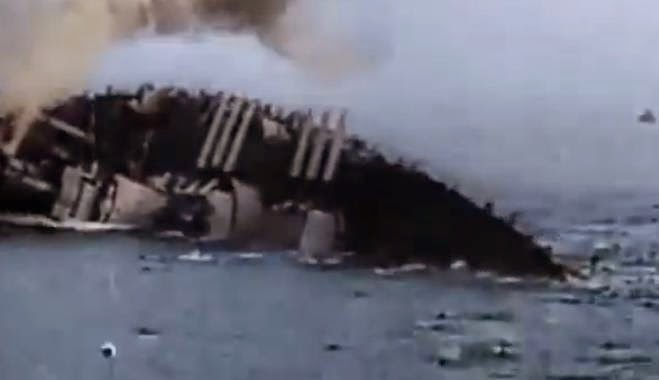
Image above: There was only one major naval engagement during the war. Here is a sinking Dreadnought during that battle, the Battle of Jutland in 1916.

History sites to use

BBC on this day since 1953
On this day.com
History.orb
World War 1 Encyclopedia
Australian War Memorial
Victoria Cross recipients
RSL Virtual War Memorial
Interactive documentary on the Great War


Scoop.it sites for the class
Windows to the Great War
History and geography Scoop.it
Just real interesting


Not just about Kings and Generals

"Anyone who tells you that he went over the top and he was not scared, he is a damn liar."                                                             Harry Patch, World War veteran in 2003.  

* Here is the link to the World War 1 in colour video we watched. It is called 'Catastrophe'.  https://www.youtube.com/watch?v=FbmgQ_LoOcw


* The story of John Adams - just a soldier in the Great War - his story.


Tuesday, August 19, 2014

In their shoes!


Image above: A South Australian soldier from the Great War, Fritz Basedow: Died of Wounds - Mustard Gas Poisoning, Rouen Haute-Normandie France, 25 April 1918, aged 24 years


History sites to use

BBC on this day since 1953
On this day.com
History.orb  
World War 1 Encyclopedia
Australian War Memorial
Victoria Cross recipients
RSL Virtual War Memorial
Interactive documentary on the Great War


Scoop.it sites for the class
Windows to the Great War
History and geography Scoop.it
Just real interesting

The first assignment: a biographical study. Download the assignment sheet here.

Our first assignment is to undertake a biographical study on a person or group. I want you to get into the shoes and head of this person or group and try

You are to develop a biographical study of an individual or group from the Great War period. The assignment is to be presented as a 10 slide presentation, comprising 400 words.

The study is to involve the following sections:

Aspects of their life (3 slides and 75 words)

·      Early years (family background, education, early years etc)

·      Work and personal events leading up to the Great War

·      Post Great War life (if survived the war)

Great War involvement (3 slides and 125 words)

·      Role in the Great War

·      Major achievements/actions in the Great War

Reflection on a life (4 slides and 200 words)

·    Why could it be said that your character is a significant individual in the Great War (Significance)

·    Describe an event in the Great War that explain how your character had a impact upon (Cause and Effect)

·    Write a 100 word letter from your character explaining his/her role in an event in the Great War (Perspective)

·    Identify a controversial/contentious event from your person’s life and discuss how they could be defended (Empathy)

 
* Some leads to consider
Here are just some ideas of a study (happy for you to suggest a study not on this list)
Tsar Nicholas 2nd, General Haig, General John Monash, Prime Minister David Lloyd George, Winston Churchill, Gavrilo Princip,  King George 5th, General Rawlinson, General Birdwood, Kaiser Wilhelm, General Ludendorff etc.

http://spartacus-educational.com/FWW.htm is a great resource for names to explore for this assignment. Remember the person does not have to be a King or Prime Minister – they can be a soldier, nurse etc. if you can find enough information about them and in some way do the reflection section (can be modified for such a study).

* Check out these sites to select and research your person

World War 1 Encyclopedia
Australian War Memorial
Victoria Cross recipients
RSL Virtual War Memorial

Monday, August 11, 2014

Behind Beneath Hill 60


Image above: An entrance to the Hill 60 Tunnel System.  

History sites to use

BBC on this day since 1953
On this day.com
History.orb
World War 1 encyclopedia
Interactive documentary on the Great War

BBC on this day since 1953
On this day.com
History.orb  
World War 1 Encyclopedia of people
Australian War Memorial
Victoria Cross recipients
RSL Virtual War Memorial
Interactive documentary on the Great War


Scoop.it sites for the class
Windows to the Great War
History and geography Scoop.it
Just real interesting

Email: malcolm.mcinerney@thebartonsc.sa.edu.au 


The background to the 'based on a true story' of the movie

I hope you found the Australian film 'Beneath Hill 60' of interest and it sets the scene for your understanding of the horror and suffering of the soldiers in the Great War. As always with films we need to find out the truth behind the movie statement; 'Based on a true story'.  There is certainly much to research about the tunnellers of the Great War. The following sites give you information on who they were, their role in the war, the conditions they worked under, their skills and overall experiences. Yes, they did exist and they were very brave men.


Some sites on the tunnellers to read and view

http://www.tunnellersmemorial.com/tunnelling-companies/

http://www.awm.gov.au/blog/2007/05/25/messines-tunnellers-and-mines/


http://www.beneathhill60.com.au/background.htm

http://www.tunnellers.net/potted_historypag.html

http://www.tunnellers.net/statisticspag.html


http://www.tunnellers.net/bits___piecespag.html

http://www.tunnellers.net/photo_albumspag.html