Sunday, August 31, 2014

The Hell of the trenches


History sites to use
BBC on this day since 1953
On this day.com
History.orb
World War 1 Encyclopedia
Australian War Memorial
Victoria Cross recipients
RSL Virtual War Memorial
Interactive documentary on the Great War
Time Maps

Scoop.it sites for the class
Windows to the Great War
History and geography Scoop.it
Just real interesting


Some great vision on the trenches

The following are excellent videos to show the nature and suffering of the trenches

* World War in colour: Episode: Slaughter in the trenches

* The reality of the trenches

* The madness of the Somme

Questions to ponder
* Why did the war become a trench stalemate*?
* What is meant when it is said that the trench stalemate led to a 'war of attrition'?
* What did the Generals do in trying to break the trench stalemate?
* What should the Generals have done to break the trench stalemate?
* Is there any way you can defend the Generals in their tactics and approach to the trench stalemate?

* A stalemate is a when a situation in which further action is blocked; a deadlock

Some background on the trenches

Life in the trenches was agonisingly uncomfortable.  In the wet months, the soldiers were constantly wet and muddy, while during the dry months water was at a premium.  Washing and activities such as brushing teeth proved almost impossible under such conditions.  Sleep remained difficult during the night from movement along the trenches, bombardment and gas precaution procedures.  Men usually slept on the floor of the trench during the day.  In winter, ankle-deep mud forced the men to dig into the side of the trench like rabbits to create a dry sleeping shelf.  The mud also made movement, dryness, comfort and cleanliness extremely difficult.  In addition to mud, lack of sleep and water restrictions, the soldiers also endured fleas, lice, rats, horrific smells from rotting bodies in no-mans land, stale food, body odours and bodily wastes in the trench area.  Explosions also left a strong smell.  Each length of trench was meant to have a latrine dug into the trench wall at right angles to the main trench.  It was common for men who had never smoked before to take up the habit just to mask the terrible smells that they were exposed to for 24 hours a day.

To add to the discomfort, the soldiers faced the ever-present fear of death by snipers, enemy raids/attacks or orders to go over the top and attack.


Monday, August 25, 2014

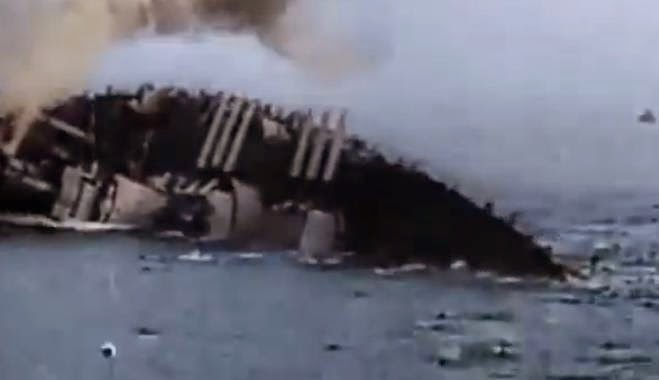
The catastrophe begins - not just about Kings and Generals!

 
Image above: There was only one major naval engagement during the war. Here is a sinking Dreadnought during that battle, the Battle of Jutland in 1916.

History sites to use

BBC on this day since 1953
On this day.com
History.orb
World War 1 Encyclopedia
Australian War Memorial
Victoria Cross recipients
RSL Virtual War Memorial
Interactive documentary on the Great War


Scoop.it sites for the class
Windows to the Great War
History and geography Scoop.it
Just real interesting


Not just about Kings and Generals

"Anyone who tells you that he went over the top and he was not scared, he is a damn liar."                                                             Harry Patch, World War veteran in 2003.  

* Here is the link to the World War 1 in colour video we watched. It is called 'Catastrophe'.  https://www.youtube.com/watch?v=FbmgQ_LoOcw


* The story of John Adams - just a soldier in the Great War - his story.


Tuesday, August 19, 2014

In their shoes!


Image above: A South Australian soldier from the Great War, Fritz Basedow: Died of Wounds - Mustard Gas Poisoning, Rouen Haute-Normandie France, 25 April 1918, aged 24 years


History sites to use

BBC on this day since 1953
On this day.com
History.orb  
World War 1 Encyclopedia
Australian War Memorial
Victoria Cross recipients
RSL Virtual War Memorial
Interactive documentary on the Great War


Scoop.it sites for the class
Windows to the Great War
History and geography Scoop.it
Just real interesting

The first assignment: a biographical study. Download the assignment sheet here.

Our first assignment is to undertake a biographical study on a person or group. I want you to get into the shoes and head of this person or group and try

You are to develop a biographical study of an individual or group from the Great War period. The assignment is to be presented as a 10 slide presentation, comprising 400 words.

The study is to involve the following sections:

Aspects of their life (3 slides and 75 words)

·      Early years (family background, education, early years etc)

·      Work and personal events leading up to the Great War

·      Post Great War life (if survived the war)

Great War involvement (3 slides and 125 words)

·      Role in the Great War

·      Major achievements/actions in the Great War

Reflection on a life (4 slides and 200 words)

·    Why could it be said that your character is a significant individual in the Great War (Significance)

·    Describe an event in the Great War that explain how your character had a impact upon (Cause and Effect)

·    Write a 100 word letter from your character explaining his/her role in an event in the Great War (Perspective)

·    Identify a controversial/contentious event from your person’s life and discuss how they could be defended (Empathy)

 
* Some leads to consider
Here are just some ideas of a study (happy for you to suggest a study not on this list)
Tsar Nicholas 2nd, General Haig, General John Monash, Prime Minister David Lloyd George, Winston Churchill, Gavrilo Princip,  King George 5th, General Rawlinson, General Birdwood, Kaiser Wilhelm, General Ludendorff etc.

http://spartacus-educational.com/FWW.htm is a great resource for names to explore for this assignment. Remember the person does not have to be a King or Prime Minister – they can be a soldier, nurse etc. if you can find enough information about them and in some way do the reflection section (can be modified for such a study).

* Check out these sites to select and research your person

World War 1 Encyclopedia
Australian War Memorial
Victoria Cross recipients
RSL Virtual War Memorial

Monday, August 11, 2014

Behind Beneath Hill 60


Image above: An entrance to the Hill 60 Tunnel System.  

History sites to use

BBC on this day since 1953
On this day.com
History.orb
World War 1 encyclopedia
Interactive documentary on the Great War

BBC on this day since 1953
On this day.com
History.orb  
World War 1 Encyclopedia of people
Australian War Memorial
Victoria Cross recipients
RSL Virtual War Memorial
Interactive documentary on the Great War


Scoop.it sites for the class
Windows to the Great War
History and geography Scoop.it
Just real interesting

Email: malcolm.mcinerney@thebartonsc.sa.edu.au 


The background to the 'based on a true story' of the movie

I hope you found the Australian film 'Beneath Hill 60' of interest and it sets the scene for your understanding of the horror and suffering of the soldiers in the Great War. As always with films we need to find out the truth behind the movie statement; 'Based on a true story'.  There is certainly much to research about the tunnellers of the Great War. The following sites give you information on who they were, their role in the war, the conditions they worked under, their skills and overall experiences. Yes, they did exist and they were very brave men.


Some sites on the tunnellers to read and view

http://www.tunnellersmemorial.com/tunnelling-companies/

http://www.awm.gov.au/blog/2007/05/25/messines-tunnellers-and-mines/


http://www.beneathhill60.com.au/background.htm

http://www.tunnellers.net/potted_historypag.html

http://www.tunnellers.net/statisticspag.html


http://www.tunnellers.net/bits___piecespag.html

http://www.tunnellers.net/photo_albumspag.html

Thursday, July 31, 2014

How did it start?


 Image above: The Pre-World War alliances

History sites to use

BBC on this day since 1953
On this day.com
History.orb  
World War 1 Encyclopedia
Australian War Memorial
Victoria Cross recipients
RSL Virtual War Memorial
Interactive documentary on the Great War


Scoop.it sites for the class
Windows to the Great War
History and geography Scoop.it
Just real interesting

Email: malcolm.mcinerney@thebartonsc.sa.edu.au  


Causes of World War 1

There are many causes of World War 1. But the event that triggered the war was the assassination of Archduke Franz Ferdinand of Austria, in June, 1914. During the period of Industrial Revolution, that is, from the 18th to the 19th century, Europe underwent drastic changes. The race for being the biggest and fastest economy in the world was the reason behind all the crisis and tension in Europe. The rising tensions over the Balkan region led to the assassination of Archduke Ferdinand.

Franz Ferdinand and Family


Gavrilo Princip image


Austria and Hungary fought over the territory with Serbia and Russia, to have greater influence in the region. The strategic geographical as well as economic position of the Balkan region was the main reason behind the fight. This fight sucked in the remaining Great Powers into the conflict through different treaties and alliances.

Important Reasons

Alliances

Serbia emerged as the victor in the Balkans, and as a result, expanded its territory. It was unacceptable for Austria to see Serbia emerge as a power in Europe. Therefore, in order to curb their power, Austria threatened war on them, if they acquired the port from the Turks. Also, Austria gained support from the Germans to drive Serbia back. England, on the other hand, threatened the German embassy to pull out of the conflict. This was because the German and Austria-Hungary alliance was in itself a big threat for Great Britain. In such a manner, alliances made by the Great Powers was seen as one of the main reasons for this conflict.


A cartoon called - 'A Chain of Friendship'


Imperialism

During the latter half of the 19th century, it was seen that nations, like Great Britain, France, and Portugal were acquiring lots of wealth from foreign colonies, markets, etc. The major colonies for these nations included India, Africa, and Australia. Other European powers, like Germany, Austria-Hungary, Italy, and Russia wished to do the same, but the British policies of strategic exclusion stopped them from doing so. Thus, the tension and the fear that Great Britain was using this wealth to increase their arms power caused more friction between the nations. There was a arms race on between these European nations to acquire colonies, indulge in colonial trade, and seek new sea routes. This was another reason that led to the tensions before June 1014.


A map of Britain, France, Germany, Russia and Austria-Hungary


Militarism (Arms Race)
All of Europe was under threat because of the rising tensions and growth of neighboring nations. This fear led to increased acquisition of military arms by nations to have a stronger defensive side. To protect their colonial possessions colonial powers rapidly increased their naval power. In response Germany was building a massive naval fleet to challenge the colonial powers.This rise in military strength produced a class of professional and powerful military officers, who actually added fuel to the war by their aggression (sabre rattling).

Important Facts

  • In response to the threats, a set of alliances were formed all over Europe. Most of them joined the alliance to save their backs in case of an attack, as everyone knew that a European war was very likely in the near future. Such a European war was also seen as likely to become a world war because the major nations involved were also colonial powers.
  • Germany and Austria-Hungary tied up to sign a treaty in 1879 forming the Dual Alliance
  • Italy joined the German and Austrian alliance in 1882, and this gave rise to the Triple Alliance
  • France and Russian Alliance was formed in 1894.
  • The Triple Entente alliance was formed between Great Britain, France, and Russia as an answer to the Triple Alliance.
  • Britian has an 'agreement' with Belgium, that if Belgium was invaded, they would come to defend them - because of the German Schleiffen Plan this agreement came into play early on 4 AUgust 1914 when Germany invaded Belgium.  

Videos to watch


From time ot time I will post on the Windows to the Past blog a list of relevant videos for you to watch. Some of these we will watch in class but the majority will be for you to watch to support your learning on the topic.  Here is a list relating to the causes of World War 1 that I would love you to watch:


Documentaries on the causes


Slide show good


July crisis


25 interesting things


Origins of World War 1


Causes and effects


Tuesday, July 29, 2014

South Australia in 1914: Before the Storm


Image above: Glenelg Jetty in 1914.


BBC on this day since 1953
On this day.com
History.orb  
World War 1 encyclopedia

Scoop.it sites for the class
Windows to the Great War
History and geography Scoop.it
Just real interesting


Email: malcolm.mcinerney@thebartonsc.sa.edu.au  


THINK PIECES ON ‘BEFORE THE STORM’

South Australia before World War 1

In pairs dot point the answers from the article from the following questions:

1. What does it mean by the newly formed “Commonwealth of Australia”?


2. What developments symbolised what is described as the golden age at the beginning of the 20th Century?


3. “The stupefying moral codes and mores of the Victorian Age.” Meaning?


4. Of the men in South Australia, how many went to the Great War and how many came back? How many were damaged when they returned?


5. What was dominating the South Australian papers before war broke out?


6. How many people lived in Adelaide in 1914? What % of South Australia’s population was that?


7. Talking population - What was the ethnic mix, average age, most common diseases and life expectancy of 1914 South Australia?


8. Tell me about family life (marriage, family size, household duties, home appliances, divorce, gender roles) in 1914 South Australia.


9. The moral and racial attitudes of South Australians were …..


10. Did 1914 Adelaide City look that different to today? In what ways was it similar and different? Who was responsible for planning it originally?


11. Where was electricity used in 1914?


12. Tell me about transport and communications in 1914 Adelaide.


13. How did women fair in 1914 South Australia?


14. What did people do for entertainment in 1914 South Australia?


15. What were the most popular recreation activities/sports in 1914 South Australia?


16. Did South Australians in 1914 do drugs or gambling?

Thursday, July 24, 2014

The past was a different world


Image above: 1826: The first photograph ever taken which still exists  by Nicéphore Niépce. He called his method heliography (sun writing) and this photograph took 8 hours of exposure time (hence sunlight on both sides of the building).
Sites related to Windows to the past

History.orb   
World War 1 encyclopedia

Scoop.it sites for the class
Just real interesting 

Email: malcolm.mcinerney@thebartonsc.sa.edu.au  

The past was a different world

So what was life like in Europe on the eve of World War 1? Here are a few images from the time:
In Paris
In New York
In Russia
In Australia


Pick an area of life and research what it was like in 1900. Develop 10 interesting points about the life at the time in relation to your chosen area.

You may pick one from:
Marriage
Travel
Working life
Life in the home
Being a child
Going to school
Communicating technology used
Recreation
Escaping life (drugs etc)
Sports
Medical
Whatever else